Deep Analysis of the African and East Asian Markets for Chinese Commercial New Energy Vehicles in 2025
II. East Asian Market: Breakthrough Pathways Amid Technological Upgrades and Policy Games
Southeast Asian countries have prioritized new energy vehicles (NEVs) for industrial upgrading. Thailand aims for electric vehicles to account for 30% of light-duty vehicles by 2030 and has implemented a 0% tariff policy for imported EVs; Indonesia plans to have 2 million electric passenger vehicles in operation by 2030 and has opened up its battery industry chain for cooperation with Chinese automakers. The East Asian market exhibits polarization: the high-end markets in Japan and South Korea (e.g., Hyundai’s hydrogen fuel cell heavy trucks in South Korea) coexist with cost-effective markets in Southeast Asia. Chinese automakers must balance technological output and cost control—for example, Yutong has launched electric buses in Vietnam adapted to high-temperature and high-humidity environments, with battery degradation controlled within 5% annually.
East Asia has a relatively well-developed charging network, with countries like Singapore and Thailand forming a "1-hour charging and swapping circle." Chinese enterprises have partnered with local energy companies to deploy ultra-fast charging networks—for instance, GAC Lingcheng and Huawei are collaborating to build an all-electric logistics system in Malaysia, supporting cross-provincial express transportation. In the commercial vehicle sector, Thai logistics companies prefer to purchase electric light trucks with a range of over 400 kilometers, while Indonesian ports favor battery-swapping heavy trucks to improve loading and unloading efficiency.
Japanese and South Korean companies dominate the high-end market—for example, Toyota has introduced hydrogen fuel cell logistics vehicles in Thailand, and Hyundai is piloting autonomous electric heavy trucks in South Korea. Chinese automakers are breaking through with differentiated technologies: CATL’s Tianxing series batteries support 70% charge replenishment in 15 minutes, suitable for trunk logistics; EVE Energy’s LF230P batteries support 1,500kW ultra-fast charging, replenishing 300 kilometers of range in 15 minutes. Additionally, China’s hybrid technologies (e.g., Great Wall’s Hi4-G architecture) achieve a 25% fuel savings rate in mountainous areas, making them more suitable for Southeast Asia’s complex terrain.
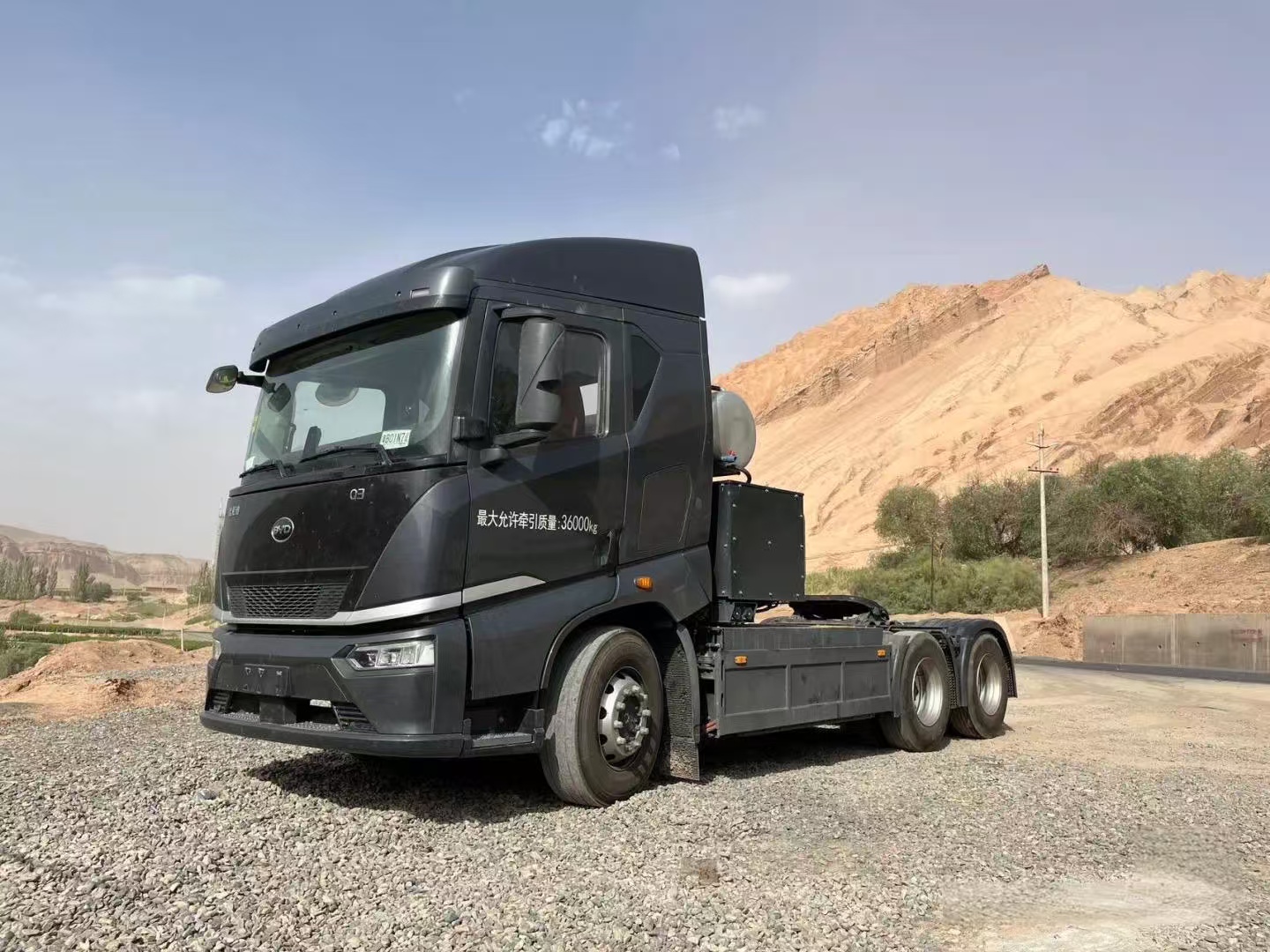 In 2025, the landscape of Chinese commercial new energy vehicles in the African and East Asian markets will be characterized by "policy-driven growth, technological breakthroughs, and ecological co-construction." In Africa, breaking through will require localized production and innovative energy replenishment models, while East Asia will demand technological upgrades and standard coordination to capture high-end markets. For used vehicle exporters, the keys to success will lie in precisely matching regional needs (such as logistics vehicles in Africa and buses in East Asia), strengthening battery evaluation and after-sales services, and leveraging policy dividends (e.g., tax exemptions in Africa and subsidies in East Asia). As the global electrification process accelerates, China's commercial vehicle industry is poised to transform from "product export" to full value chain output of "technology + standards + services," injecting new momentum into the green transportation revolution in Africa and East Asia.